 Kai Golan Hashiloni
Kai Golan Hashiloni
Kai Golan Hashiloni
NLP Researcher · PhD Student at Reichman University
Nice to meet you! I am Kai, an NLP enthusiast and a hard worker. I'm currently a PhD Student at Reichman University, Israel. I explore the intersection of languages and computers, focusing the low-resource languages and LLMs understanding and representation abilities.
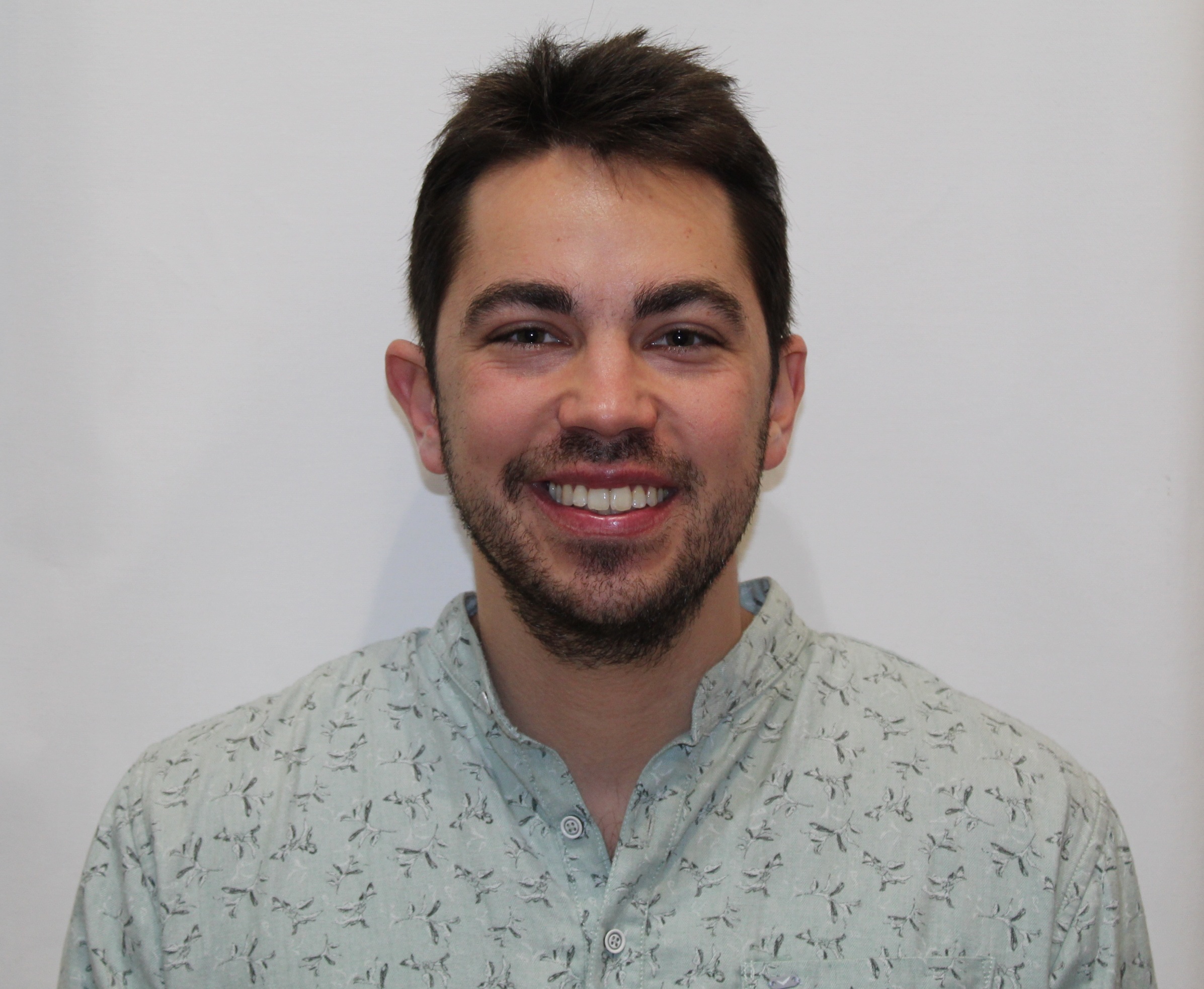
I am a lead researcher in the ERC Synergy funded project Intellexus, where we study the "Geology of Texts, Genealogy of Concepts and Intellectual Ecosystems in the Indic and Tibetic Buddhist Text Corpora".
Feel free to explore my CV, check out my publications, browse my talks & events, or contact me for collaborations or inquiries!
 LinkedIn
 GitHub
 Scholar
 ACL Anthology
News
… See all news → · See all publications → · See talks & events →
My Research
Computational Linguistics
I investigate non-compositional language phenomena such as idioms and metaphors, using LLMs to study how meaning emerges beyond individual words. This work combines linguistic theory with modern neural methods to better understand semantic representation.
Example: Easy as PIE? Identifying Multi-Word Expressions with LLMs (Hashiloni et al., 2025)
Digital Humanities
Together with the ERC Synergy project Intellexus, I develop language technologies for the analysis of Buddhist texts in Sanskrit and Tibetan, bridging NLP with philology and cultural studies. I aim to enable large-scale, computational access to historical knowledge.
Example: DharmaBench: Evaluating Language Models on Buddhist Texts in Sanskrit and Tibetan (Hashiloni et al., 2025)
Low-Resource Languages
My research focuses on modeling underrepresented languages such as Sanskrit, Tibetan, and Hebrew. I develop methods for learning with limited data, often leveraging cross-lingual transfer and prompt-based approaches to extend NLP capabilities beyond high-resource settings.
Safety in AI
I study interpretability and explainability in large language models, with a focus on how meaning is represented across layers and prompts. My work explores how we can better understand, trust, and control LLM behavior in complex linguistic tasks.
Example: Not Just a Piece of Cake: Cross-Lingual Fine-Tuning for Idiom Identification (Hefetz et al., 2025)
NLP for Healthcare
Together with I-NEXT DATA at the Tel Aviv Sourasky Medical Center (Ichilov), we design NLP systems for real-world healthcare impact. We develop NLP pipelines for extracting structured patient journeys from clinical records and anonymizing sensitive text. Our research emphasizes privacy-preserving methods and the responsible deployment of language models in medical domains.
Example: Building Patient Journeys in Hebrew: A Language Model for Clinical Timeline Extraction (Hashiloni et al., 2025)